
Brain–Computer Interface (BCI)
10.12.2025
Brain–Computer Interface (BCI)
Context
India is actively exploring neurotechnology and Brain–Computer Interfaces (BCIs) as strategic tools to drive healthcare innovation, economic growth, and technological leadership, keeping pace with global advancements led by the U.S., China, and Europe.
About Brain–Computer Interface (BCI)
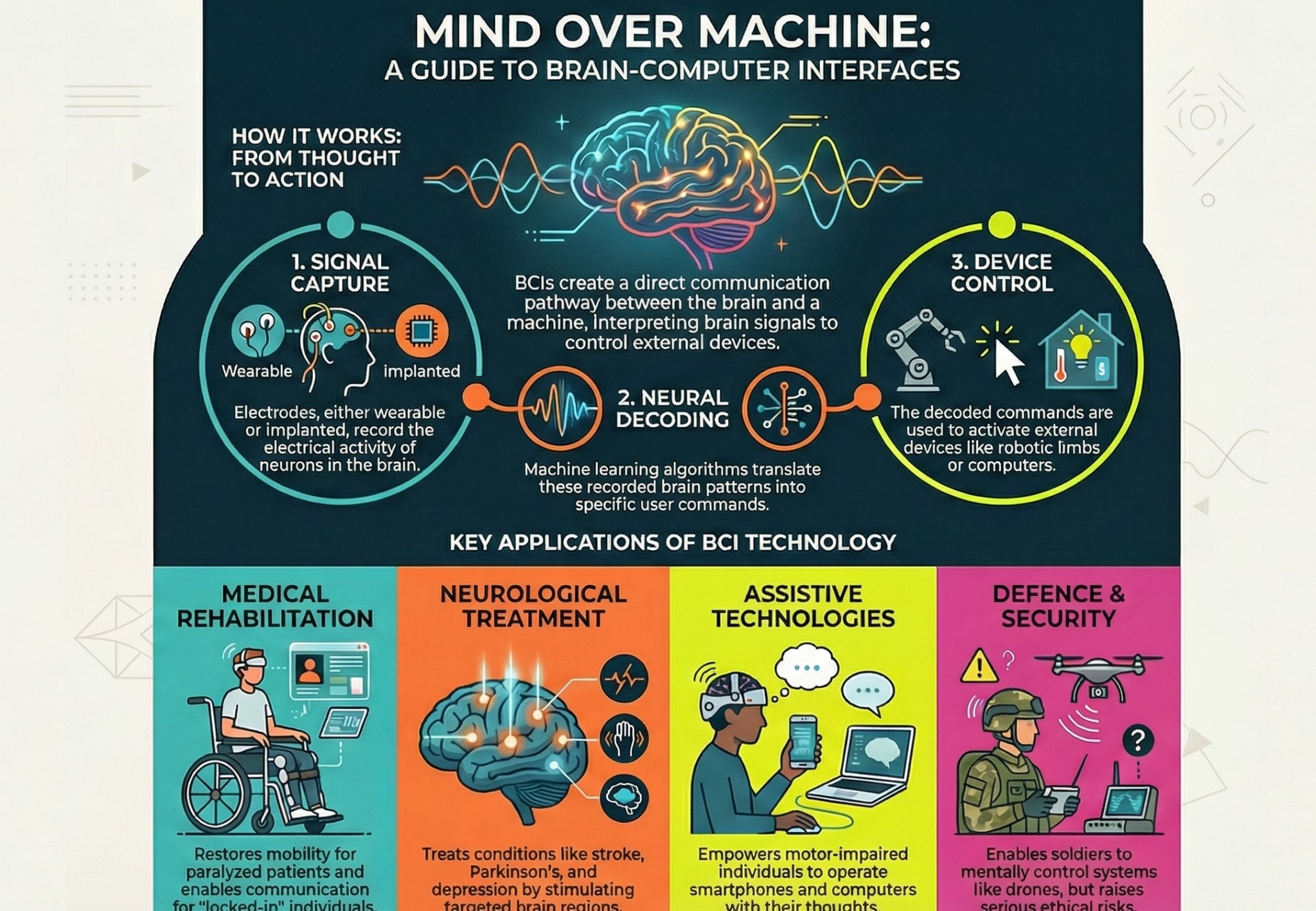
- Definition: A BCI is a system that interprets brain signals and converts them into digital commands to control external devices such as computers, robotic limbs, or wheelchairs.
- Core Function: It establishes a two-way communication channel between the brain and machines. This technology is designed to aid in the restoration of lost biological functions or to enable entirely new capabilities.
How It Works
- Signal Capture: Electrodes (which can be invasive implants or non-invasive wearables) record the electrical activity generated by neurons.
- Neural Decoding: Machine learning algorithms translate these recorded patterns into specific user intentions (e.g., selecting a letter or moving an arm).
- Device Control: The decoded signals are used to activate external devices, ranging from robotic limbs and speech synthesizers to drones and smart-home systems.
- Feedback Loop: The system employs continuous decoding to improve accuracy over time, facilitating real-time brain-machine interaction.
Key Features
- Direct Brain–Machine Link: It effectively bypasses damaged nerve or muscle pathways, making it a critical technology for paralyzed patients.
- Versatility: Options range from implantable electrodes offering high precision to wearable EEG devices for safer, everyday use.
- Real-Time Response: The integration of AI accelerates signal decoding, allowing for fast and naturalistic control.
- Bidirectional Capability: Emerging BCI technologies can also stimulate the brain to restore function or treat specific disorders.
Applications
- Medical Rehabilitation: BCIs help restore mobility in paralyzed patients using robotic limbs. They also enable "locked-in" patients to communicate through neural spellers or gaze-based typing.
- Neurological Treatment: The technology is used to treat conditions like stroke, Parkinson’s, and depression by stimulating targeted brain regions, potentially reducing long-term reliance on conventional medication.
- Assistive Technologies: BCIs empower motor-impaired individuals to operate smartphones and computers via thought-driven commands, significantly boosting independence.
- Defence & Security: In the defence sector, BCIs could enable soldiers to control drone swarms or communication systems mentally. However, this application raises serious ethical, legal, and security risks.
Conclusion
Brain–Computer Interfaces represent a paradigm shift in bridging the gap between biological intelligence and artificial systems. While they offer revolutionary potential in healthcare and assistive technology, their strategic implementation in sectors like defence requires careful navigation of ethical and safety standards.