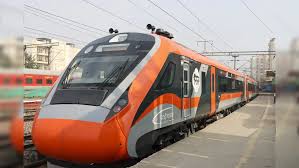
The New Track: Reimagining Indian Railways for the 2025 Era
The New Track: Reimagining Indian Railways for the 2025 Era
The Indian Railways, often described as the "lifeline of the nation," is undergoing its most significant structural transformation since independence. In December 2025, the Ministry of Railways announced a calibrated fare revision, signaling a shift from a purely subsidy-driven service model to one focused on financial sustainability. This adjustment is not merely a price hike; it is a strategic maneuver designed to balance the social obligation of providing affordable transport to millions while generating the capital necessary for an aging infrastructure that must now cater to a $5 trillion economy. By focusing on long-distance rationalization and protecting short-distance commuters, the government aims to bridge the gap between escalating operational costs and the need for world-class safety and speed.
Deciphering the 2025 Fare Rationalization
The fare revision structure implemented on December 26, 2025, follows a highly nuanced logic to minimize the impact on daily travelers. To protect the most vulnerable economic segments, the government has maintained existing fares for all suburban travel and monthly season tickets. Additionally, there is no fare increase for Ordinary Class journeys up to 215 kilometers. For journeys exceeding this threshold, a marginal increase of 0.01 paise per km applies to Ordinary Class, while Mail/Express (both AC and Non-AC) classes see an increase of 0.02 paise per km. While these numbers seem microscopic, translating to just ₹10 extra for a 500 km Non-AC journey, the cumulative effect is a projected revenue boost of nearly ₹600 crore annually. This "drip-feed" revenue model allows the Railways to meet the rising costs of manpower and pensions without placing a crushing burden on the common citizen.
The Financial Pulse: Understanding Operating Ratio
At the heart of railway economics lies the Operating Ratio (OR), a metric that tracks how much the Railways must spend to earn ₹100. Historically, the Indian Railways has struggled with an OR hovering near the danger zone; for the 2024-25 fiscal year, it was reported at 98.90%. This means for every rupee earned, approximately 99 paise was spent on operational expenses like fuel, salaries, and maintenance, leaving a meager 1 paisa surplus for safety upgrades or track expansion. The 2025 reforms aim to push this ratio toward a target of 98.42%. A lower OR is the ultimate goal of any infrastructure giant, as it signifies that the organization is generating enough internal resources to fund its own modernization rather than relying solely on Gross Budgetary Support from the central government.
Navigating Structural Challenges and Subsidies
One of the most complex issues facing the network is the phenomenon of cross-subsidization. Currently, the Railways operates its passenger segment at a significant loss to ensure public affordability. To cover this deficit, it charges higher tariffs on freight (goods) transport. This creates a "logistics paradox": high rail freight costs push businesses toward road transport, which is often faster but more carbon-intensive. This has caused a significant logistics shift over the decades, with the Railways' modal share of freight dropping to approximately 27%. Additionally, massive fixed costs including a manpower bill of ₹1.15 lakh crore and a pension outgo of ₹60,000 crore which act as a constant drain on the treasury, making structural reform an absolute necessity for survival.
Dedicated Freight Corridors: The Logistics Game-Changer
To break the cycle of cross-subsidization and reclaim market share, India has accelerated the commissioning of Dedicated Freight Corridors (DFC). As of late 2025, the Eastern and Western DFCs have significantly increased the average speed of freight trains to over 50 kmph, compared to the previous average of 25 kmph on shared tracks. By July 2025, the government had already commissioned over 3,400 km of new lines, gauge conversions, and doubling. These exclusive tracks allow goods trains to run with higher "heavy-haul" capacity without being sidelined for passenger traffic. The ultimate goal under the National Rail Plan is to increase the Railways' modal share in freight to 45% by 2030, which would drastically reduce India's overall logistics costs from 14% of GDP to a global standard of 8-9%.
Modernization and the "Railopolis" Vision
The physical appearance of the Indian Railways is changing through the Amrit Bharat Station Scheme. Under this initiative, 1,337 stations have been identified for redevelopment into modern "city centers." By December 2025, work at 155 stations had been completed, featuring world-class amenities such as roof plazas, wider foot overbridges (FOBs), and "One Station One Product" kiosks to support local artisans. This modernization extends to safety with the Kavach 4.0 anti-collision system. As of late 2025, the system is live on over 2,000 km of the network, including the vital Mathura-Nagda section. These "Railopolis" hubs and safety upgrades are increasingly involving Public-Private Partnerships (PPP), with new policies inviting private investment in commercial lines and tourism-centric "Bharat Gaurav" trains.
The Economic Multiplier and Future Outlook
Investment in the Railways is one of the most powerful tools for national economic growth. Government spending on infrastructure (Capital Expenditure) creates a Money Multiplier Effect, where every rupee spent generates multiple times its value in the broader economy. This investment impacts over 250 different industries, from steel and cement to advanced telecommunications for the Kavach system. As the network moves toward its goal of Net Zero Carbon Emission by 2030 through nearly 100% electrification and solar integration, it is not just moving people; it is driving a green revolution. The transition from a "Service-only" model to a "Sustainability-led" model ensures that the Indian Railways remains a globally competitive, fiscally healthy engine of growth.
Conclusion
The trajectory of the Indian Railways in 2025 reflects a nation in transition. By embracing tough fiscal decisions like fare rationalization and bold infrastructure projects like DFCs and the Kavach safety system, the "Iron Silk Road" of India is being rebuilt for the 21st century. The ultimate success of these reforms will depend on maintaining a delicate balance: keeping the journey affordable for the millions who depend on it daily, while ensuring the system itself generates the surplus needed to remain the backbone of a developed India.